Back to Blog
Ev Chargers
Powering Your New Year's Resolution: What to Know About Home EV Charger Installation in 2026
Couillard Electric
0 views
Made the switch to an electric vehicle? Discover everything Sheboygan County homeowners need to know about professional EV charger installation, from electrical panel requirements to 2026 rebates and safety considerations.
# Powering Your New Year's Resolution: What to Know About Home EV Charger Installation in 2026
If you're one of the growing number of Wisconsin residents who made the switch to an electric vehicle this year, congratulations! You've taken a significant step toward reducing your carbon footprint and fuel costs. But as many new EV owners quickly discover, the convenience of electric vehicle ownership really comes down to one crucial factor: having a reliable home charging solution.
While you can technically charge an EV using a standard household outlet, most drivers find this approach frustratingly slow for daily use. That's where professional EV charger installation comes in. At Couillard Electric, we've helped dozens of homeowners throughout Sheboygan County—from Kohler to Mequon—set up efficient, safe home charging stations. In this guide, we'll walk you through everything you need to know about installing an EV charger at your Wisconsin home in 2026.
## Level 1 vs. Level 2 Charging: What's Right for Your Home?
Before diving into the installation process, it's important to understand your charging options. There are two main types of home EV charging:
**Level 1 Charging** uses your standard 120-volt household outlet—the same one you'd plug a lamp or phone charger into. While this requires no special installation, it's painfully slow, typically adding only 3-5 miles of range per hour of charging. For most Wisconsin drivers with daily commutes, this means your car might not fully recharge overnight, especially during cold winter months when battery efficiency drops.
**Level 2 Charging** is the game-changer most homeowners choose. Operating on a 240-volt circuit (similar to your electric dryer or oven), Level 2 chargers can add 25-30 miles of range per hour—sometimes more, depending on your vehicle and charger model. This means a typical overnight charge can fully replenish your battery, even after a long day of driving around Sheboygan County.
For Wisconsin residents who commute to work, run errands around Plymouth or Port Washington, or take weekend trips, Level 2 charging isn't just convenient—it's practically essential. The faster charging speed also means you're less likely to experience "range anxiety" and can take advantage of off-peak electricity rates by charging overnight.
## Does Your Electrical Panel Have the Capacity?
Here's where many homeowners hit their first roadblock: not every electrical panel can handle the additional load of an EV charger. Level 2 chargers typically require a dedicated 240-volt circuit with 30 to 50 amps of capacity, depending on the charger model you choose.
If your home was built in the last 20 years, there's a good chance your electrical panel has sufficient capacity—most modern panels are rated for 200 amps. However, many older homes in Sheboygan, Cedarburg, and surrounding communities were built with 100-amp or even 60-amp service, which may not leave enough headroom for an EV charger once you account for your existing appliances, heating system, and other electrical loads.
**Signs you might need a panel upgrade include:**
- Frequent circuit breaker trips
- Flickering lights when major appliances run
- An electrical panel that's 25+ years old
- Visible rust, corrosion, or burning smells near your panel
- A panel rated for less than 150 amps
The good news? If you do need a panel upgrade, it's an investment that benefits your entire home, not just your EV charging needs. A modern electrical panel improves safety, increases your home's value, and provides the capacity for future upgrades like central air conditioning, a hot tub, or additional circuits.
### The Importance of a Dedicated Circuit
Regardless of your panel's capacity, your EV charger must be installed on its own dedicated circuit. This isn't just a best practice—it's required by the National Electrical Code (NEC) and Wisconsin electrical codes. A dedicated circuit ensures your charger has consistent, reliable power and prevents overloading circuits that serve other parts of your home.
Attempting to share a circuit with other appliances is not only against code but also dangerous. It can lead to overheating, fire hazards, and damage to your expensive EV charging equipment. This is one of many reasons why professional installation by a licensed electrician is absolutely essential.
## Professional Installation: What Happens During Your EV Charger Setup
When you work with Couillard Electric for your EV charger installation, here's what you can expect:
**Initial Assessment:** We'll start with a thorough evaluation of your electrical panel, existing circuits, and the proposed charger location. We'll measure the distance from your panel to the installation site (typically your garage or driveway) and assess whether any obstacles need to be addressed.
**Permit and Planning:** In Wisconsin, EV charger installations require electrical permits to ensure code compliance and safety. We handle all the permitting paperwork with your local municipality, whether you're in Sheboygan, Grafton, West Bend, or any other community we serve.
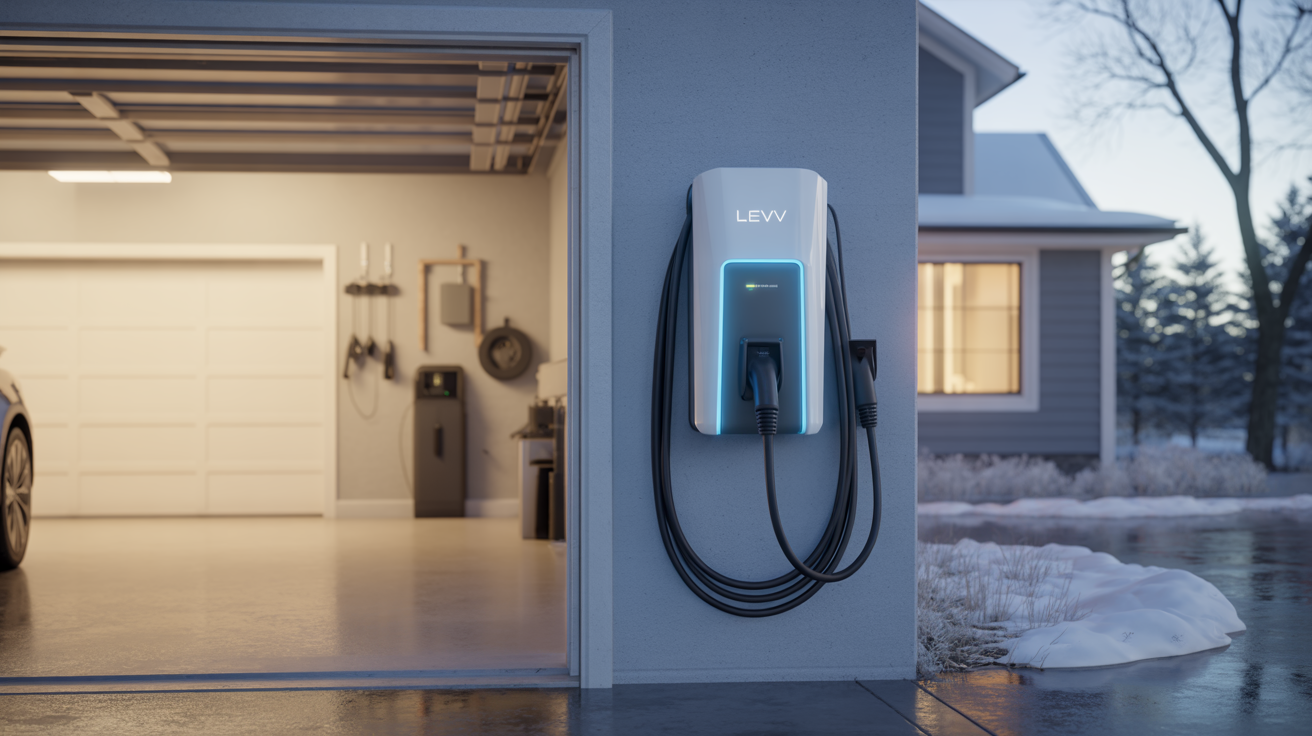
**Installation Day:** Most EV charger installations take 4-6 hours, depending on the complexity. We'll install the dedicated circuit breaker in your panel, run the appropriate wiring (typically 6-gauge or 8-gauge wire in conduit), mount your charger, and make all the necessary connections. If you're installing an outdoor charger—common in Wisconsin—we'll ensure it's properly weatherproofed and rated for our harsh winters.
**Testing and Inspection:** Before we leave, we'll thoroughly test your new charger to ensure it's operating correctly and safely. We'll also schedule any required municipal inspections to ensure everything meets local code requirements.
**Indoor vs. Outdoor Considerations:** Wisconsin weather is tough on outdoor equipment. If you're installing an outdoor charger, we'll make sure it's rated for extreme temperatures and properly protected from snow, ice, and moisture. Many homeowners in our area prefer garage installations when possible, but we can make outdoor installations work safely and reliably.
## 2026 EV Charger Installation Costs and Available Rebates
One of the most common questions we hear is: "How much will this cost?" While every installation is unique, here's what you can typically expect:
**Installation costs** generally range from $800 to $2,500, depending on factors like the distance from your electrical panel, whether you need a panel upgrade, and the complexity of the wiring route. The charger unit itself typically costs $400-$1,200, depending on features like WiFi connectivity, scheduling capabilities, and charging speed.
But here's the exciting part: 2026 offers some excellent incentive opportunities that can significantly offset these costs.
**Federal Tax Credits:** The federal government continues to offer tax credits for EV charger installations, covering up to 30% of the installation cost (including both equipment and labor) up to certain limits. Check with your tax advisor about current eligibility requirements.
**Wisconsin State Incentives:** Wisconsin has expanded its clean energy incentive programs for 2026. Depending on your income level and location, you may qualify for additional state rebates.
**Utility Rebates:** Many Wisconsin utility companies, including those serving Sheboygan County, offer rebates for EV charger installations. These programs often provide $250-$500 back, and some utilities offer special time-of-use rates that make overnight EV charging even more economical.
When you factor in these incentives plus the money you'll save by charging at home instead of using public charging stations (which can cost $0.30-$0.60 per kWh compared to typical residential rates of $0.12-$0.16 per kWh), the return on investment becomes very attractive.
## Keeping Your Home EV Charger Safe and Efficient
Once your EV charger is installed, it requires minimal maintenance—but there are important safety considerations every homeowner should know:
**Always use a licensed electrician for installation.** This cannot be overstated. DIY EV charger installation is not only dangerous but also illegal in Wisconsin without proper licensing. Improper installation can lead to electrical fires, damage to your vehicle's charging system, voided warranties, and serious safety hazards. Insurance companies may also deny claims related to unlicensed electrical work.
**Schedule regular inspections.** We recommend having your EV charger inspected annually as part of your home's overall electrical maintenance. This is especially important in Wisconsin, where temperature extremes can affect outdoor electrical equipment.
**Watch for warning signs:** Contact a professional immediately if you notice any of these issues:
- The charger feels excessively hot during use
- You smell burning plastic or see discoloration around the unit
- The circuit breaker trips repeatedly
- The charger displays error codes or fails to charge consistently
- You notice any physical damage to the unit or wiring
**Winter weather considerations:** If you have an outdoor charger, keep it clear of snow and ice buildup. While quality chargers are designed to handle Wisconsin winters, ensuring proper drainage and ventilation will extend the life of your equipment.
## Ready to Install Your Home EV Charger?
Installing a home EV charger is one of the best investments you can make as an electric vehicle owner. It provides the convenience of waking up to a fully charged vehicle every morning, saves money compared to public charging, and adds value to your home—especially as EV adoption continues to grow.
At Couillard Electric, we've been serving homeowners and businesses throughout Sheboygan County for years, and we're proud to be your local experts in EV charger installation. Whether you're in Sheboygan, Kohler, Plymouth, Mequon, Port Washington, Cedarburg, Grafton, West Bend, or any surrounding community, we're here to help you make the transition to home EV charging as smooth as possible.
Our licensed electricians will assess your home's electrical system, recommend the right charger for your needs, handle all permitting and installation, and ensure everything is done safely and to code. We'll even help you navigate available rebates and incentives to maximize your savings.
**Ready to get started?** Contact Couillard Electric today for a free consultation and quote. Call us or visit our website at couillardelectricllc.com to schedule your EV charger installation. And remember, we're also available 24/7 for emergency electrical services—because we know electrical issues don't always happen during business hours.
Make 2026 the year you enjoy the full convenience of electric vehicle ownership with a professional home charging solution from Sheboygan County's trusted electrical experts.
Need Electrical Services?
Couillard Electric serves Sheboygan County and surrounding areas with professional electrical services. Contact us today for a free estimate.